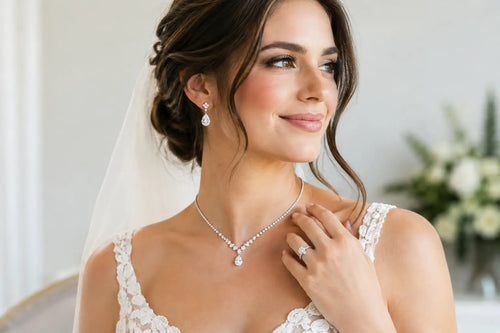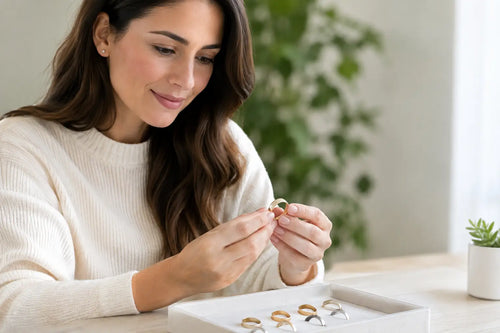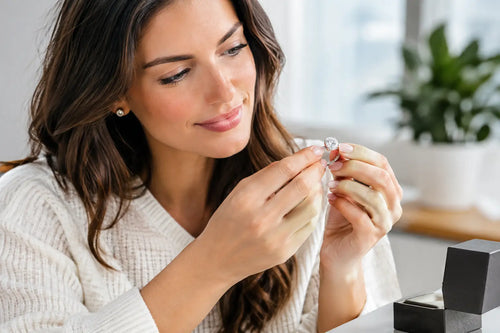

A ring setting does more than hold a center stone in place. It changes the entire personality of the piece: how much light reaches the gem, how it feels against your hand, and how confidently it moves through everyday life. In the bezel versus prong decision, there is no lesser choice. There is only the setting that best reflects your style, routine, and vision of forever.
For a luminous moissanite engagement ring, the difference can feel especially striking. Prongs create airy, light-filled brilliance, while bezels frame the stone with sleek, sculptural security. Both can make a D-color, VVS-clarity moissanite look extraordinary. The question is whether you want your center stone to appear more open and elevated or more defined and protected.
Bezel Versus Prong: The Visual Difference
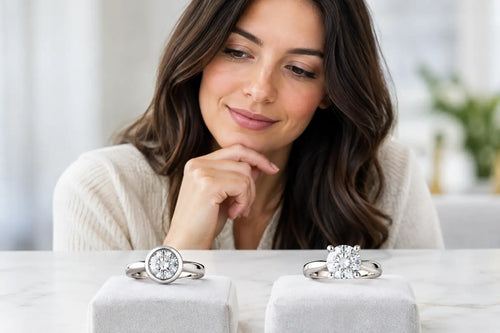
A prong setting uses small metal claws to secure the gemstone. Most classic solitaire rings use four or six prongs, leaving much of the stone visible from above and the sides. The result is the familiar, romantic engagement-ring silhouette many people picture when they imagine a proposal: a center stone that seems to float above a delicate band.
A bezel setting surrounds the outer edge of the gemstone with a rim of metal. In a full bezel, the metal wraps completely around the stone's perimeter. A partial bezel, also called a half bezel, leaves sections of the stone open while still creating a modern framed effect. Bezels can be slim and understated or bold enough to become a central design feature.
Prongs place the spotlight squarely on the gem. A bezel makes the gem and the metalwork feel like one intentional, polished composition. If you love a traditional bridal look with maximum visible stone, prongs usually lead the conversation. If you are drawn to clean lines, contemporary styling, and a slightly more tailored profile, a bezel has undeniable appeal.
Sparkle: Which Setting Lets Moissanite Shine?
Moissanite is celebrated for exceptional brilliance and fire, and a prong setting gives those qualities plenty of room to perform. Because prongs expose more of the stone's sides, light can enter from multiple angles. This creates an open, high-impact look that amplifies the crisp flashes and rainbow fire that make precision-cut moissanite so captivating.
For buyers who want a center stone to look as large and radiant as possible, a prong setting is often the natural choice. It reveals more of the stone's outline, particularly in shapes with dramatic silhouettes such as oval, pear, marquise, emerald, and radiant cuts. A well-designed four-prong setting can make the outline feel beautifully uninterrupted, while six prongs add a more classic, rounded look and additional security.
A bezel may cover a narrow edge of the stone, so it can show slightly less of the gem than a prong setting. That does not mean it lacks brilliance. A finely crafted bezel can create a luminous, mirror-like border that makes a bright moissanite center feel crisp and deliberate. With an emerald, asscher, or round moissanite, the contrast between bright stone and polished metal can look exceptionally refined.
The difference is less about whether one setting sparkles and more about the kind of statement it creates. Prongs offer open, romantic radiance. Bezels offer a sleek, editorial gleam.
Everyday Wear and Stone Protection
This is where bezels earn their reputation. Because the metal rim surrounds the stone's edge, a bezel offers excellent protection from accidental knocks. It also has a smoother profile, with fewer exposed elements to catch on knitwear, hair, towels, or gloves. For anyone who works with their hands, cares for young children, travels often, or simply prefers jewelry that asks for less caution, a bezel can be a smart and beautiful choice.
Prongs are secure when they are properly made and maintained, but they need occasional attention over the years. A prong can catch if it becomes bent or worn, and it should be checked periodically to make sure the stone remains snug. That is standard care for fine jewelry, not a reason to avoid the style. Millions of beloved engagement rings are prong-set for a reason: the setting is elegant, time-tested, and remarkably versatile.
Moissanite is an excellent stone for daily wear, with impressive durability for the life you plan to live. The setting still matters because it protects the stone's edges and determines how the ring interacts with your routine. A bezel adds an extra layer of reassurance. Prongs create more visual lift and exposure. Consider which benefit will make you feel more confident when you reach for your ring every morning.
Think About the Ring's Profile
The setting style is only part of the durability story. A low-set prong ring may be less likely to catch than a high-set design, while a high bezel can still stand proudly above the band. If a low profile is your priority, look for a setting designed to sit closer to the finger.
A lower profile can feel more comfortable for daily tasks and create a streamlined appearance. A taller prong setting can give the center stone extra presence, especially from the side. Neither is automatically better. It depends on whether you want a ring that feels tucked in and effortless or lifted and undeniably glamorous.
Style and Shape: Finding the Right Match
Prong settings work beautifully across virtually every moissanite shape. A round solitaire with six prongs feels timeless and romantic. Four prongs give a cushion, radiant, princess, or oval cut a cleaner, more contemporary outline. For pear and marquise stones, a V-prong at the pointed tip offers added protection while preserving the stone's distinctive silhouette.
Bezel settings are equally adaptable, but they create a stronger design point of view. An oval bezel can look modern and quietly dramatic. A full bezel around an emerald-cut moissanite emphasizes its elegant geometry. A bezel-set round stone can take on a chic, almost architectural character, especially paired with a smooth, polished band.
Consider your existing wardrobe, too. If your personal style leans toward tailored pieces, minimal gold jewelry, and clean silhouettes, a bezel ring may feel instantly at home. If you love classic bridal details, soft romance, and a center stone that catches the eye from every angle, prongs may feel more like you.
Wedding Bands and Stacking Considerations
If you plan to wear an engagement ring with a wedding band, the setting height and shape deserve a closer look. Many prong-set solitaires pair easily with straight bands because the center stone is elevated above the shank. This creates room for a band to sit close beside it, producing the clean, flush look many couples want.
A bezel setting may sit lower or extend farther around the center stone, which can create a small gap with a straight wedding band. That can be lovely if you prefer a little negative space, but it is worth considering before you commit. A curved or contoured band can create a close, intentional fit around a bezel-set center stone.
For a stack of anniversary bands or an eternity ring, either setting can work beautifully. The key is proportion. A bold bezel center often pairs best with a more delicate band, while an airy prong solitaire can carry a wider or more detailed stack without feeling crowded.
Price, Metal, and Long-Term Care
The price difference between bezel and prong settings can vary based on the design and amount of metal used. A full bezel may require more metal and detailed craftsmanship, while a prong setting can range from a simple solitaire to an elaborate halo or cathedral design. The center stone, metal choice, and overall ring construction will usually have the greatest effect on the final price.
With either style, choose a setting made for real life and give it the care fine jewelry deserves. Remove your ring for heavy lifting, harsh chemicals, and high-impact activities. Clean it gently to keep oils and daily residue from dulling its shine. For prong settings, periodic professional inspections help ensure every claw remains secure. For bezels, check that the metal edge stays smooth and the stone remains firmly set.
At Henri Carat, moissanite makes it possible to choose the setting you truly love without sacrificing visual impact for budget. Whether you prefer a sculptural bezel or a classic prong design, exceptional sparkle should never feel out of reach.
The right setting is the one you will be excited to see in every small moment - across a dinner table, wrapped around a coffee cup, or catching the light when you least expect it. Choose the design that lets you shine with confidence, then make it part of your story.