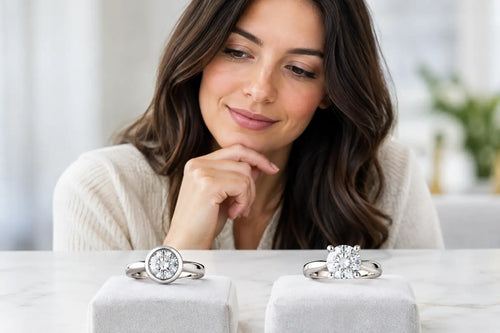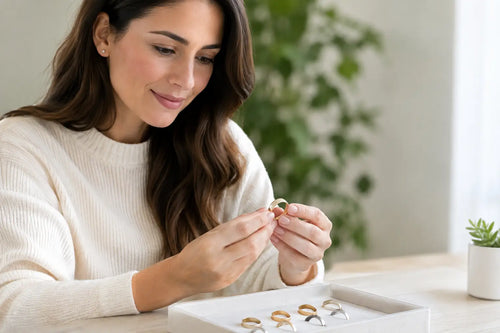

The moment you find a ring with the brilliance, silhouette, and presence you have been waiting for, sizing should not be the detail that holds you back. Knowing how to measure ring size correctly helps your new piece feel as beautiful to wear as it looks: secure enough to stay put, comfortable enough for every day, and effortless from the first photo to the thousandth glance.
A ring size is more personal than it seems. Finger shape, knuckle width, temperature, and even the band you choose can influence the best fit. Whether you are selecting a sculptural moissanite engagement ring, a sleek wedding band, or a meaningful gift, a little care before ordering makes all the difference.
What a Well-Fitted Ring Should Feel Like
A properly sized ring should slide over your knuckle with slight resistance, then rest comfortably at the base of your finger. It should not spin constantly, pinch your skin, or leave a deep indentation after a few minutes. At the same time, it should not feel loose enough to slip off when your hands are cool or wet.
The ideal fit depends on the design. A narrow solitaire band can feel lighter and more forgiving than a wide eternity band, while a ring with a larger center stone may need a snugger fit to reduce spinning. There is no prize for choosing the smallest size. The right size is the one that lets you shine with confidence.
How to Measure Ring Size at Home
The most dependable at-home method is to measure an existing ring that already fits the intended finger. If you are measuring for a surprise, borrow a ring your partner wears on that same finger whenever possible. Fingers on the left and right hand can be different sizes, and the ring finger is not interchangeable with a thumb or index finger.
Measure the Inside Diameter of a Ring
Place the ring flat on a ruler marked in millimeters. Measure straight across the center of the inside opening, from one inner edge to the other. Do not include the metal band in the measurement.
Compare that diameter with a US ring size chart. For reference, a 16.5 mm inside diameter is typically a US size 6, while 17.3 mm is typically a size 7 and 18.1 mm is typically a size 8. Because even a fraction of a millimeter can matter, use a ruler with clear millimeter markings and repeat the measurement two or three times.
This method works especially well when the ring has a round shape and a band that lies flat. If the ring is warped, oval-shaped from wear, or heavily set with stones, use another method to confirm the result.
Use a Printable Ring Sizer or Ring Sizing Tool
A printable ring-sizing guide can be accurate when printed at 100 percent scale. Before placing a ring over the circles on the page, verify the print scale with the reference line provided. Then place the ring over each circle until the inside edge aligns precisely with the circle's outer edge.
A physical adjustable ring sizer is another smart choice. Slip it onto the intended finger and tighten it until it feels secure but comfortable. Test it over the knuckle before reading the size. If it catches too firmly, the fit may be too tight. If it glides off without any resistance, it is too loose.
Measure Your Finger With Paper or String
If you do not have a ring that fits, use a thin strip of paper. Wrap it around the base of the finger, mark the point where the paper overlaps, then lay it flat and measure the length in millimeters. That measurement is the finger circumference, which can be matched to a US size chart.
String can work in a pinch, but paper is generally more precise because string can stretch or compress. Avoid measuring with anything thick, such as ribbon or yarn, as it can add length and lead to an oversized result. Keep the paper snug but never tight enough to press into the skin.
For the most reliable answer, take the measurement three times at different points in the day. If the results vary, choose the size closest to the average, or consider sizing up slightly if your knuckle is noticeably wider than the base of your finger.
Measure at the Right Time of Day
Your fingers naturally change size. Heat, cold, exercise, salty meals, hormones, and travel can all make them swell or shrink. Measuring at the wrong moment can turn a seemingly perfect size into an uncomfortable surprise.
Measure in the late afternoon or evening, when fingers tend to be at their most natural size. Avoid measuring immediately after waking up, after a workout, or when your hands are cold. Warm your hands first if needed, but do not measure after soaking them in hot water, which can cause temporary swelling.
If you live in a climate with major seasonal temperature shifts, favor a fit that passes over the knuckle comfortably without feeling loose at the base. A ring that is just a touch snug on a warm day is often more dependable year-round than one that already slides freely.
Consider the Band Width and Ring Style
Not every ring in the same numerical size feels the same. The wider the band, the more surface area it covers on your finger, which can make it feel tighter. Many people prefer to go up by a quarter or half size for bands that are 6 mm wide or more.
Eternity bands deserve particular attention. Because diamonds or moissanite stones often extend around the entire band, resizing can be limited or more complex than it is with a plain metal shank. Getting the size right before choosing a full-circle design protects both the setting and the uninterrupted sparkle.
For stacked rings, consider how the pieces will sit together. A slim engagement ring and wedding band may feel comfortable in the same size, but two or three bands worn together can create a tighter overall fit. If you intend to build a stack over time, leave room for the look you want to wear daily.
Choosing a Size for an Engagement Ring Surprise
A surprise proposal adds romance, but it can make measuring more delicate. Start with a ring your partner wears regularly on their ring finger. Quietly compare it to a ring-sizing guide, or take it to a professional jeweler for measurement.
If the only available ring is worn on another finger, use it as a clue rather than a final answer. A middle finger ring, for instance, is often larger than a ring finger size. Pay attention to whether your partner prefers rings fitted close to the hand or wears them loose and relaxed.
When you are caught between two sizes, the better choice depends on the design and the person. For a narrow band, rounding down may be reasonable if the person has slender fingers and small knuckles. For a wider band, a large center stone, or uncertain measurements, rounding up is often the more comfortable decision. A thoughtfully selected ring is still a beautiful beginning, even if a small sizing adjustment is needed later.
Common Ring Sizing Mistakes to Avoid
The biggest mistake is measuring only once. A single reading on a cold morning may be very different from your usual size after a normal day. Another common issue is using the outside diameter of a ring instead of the inside diameter, which makes the size appear larger than it really is.
Do not pull paper or string too tightly around the finger. A ring needs enough clearance to pass over the knuckle. It is also wise to avoid guessing based solely on height, weight, or shoe size. There is no consistent formula for predicting ring size, and a personal measurement is always more accurate.
Finally, make sure you are using a US ring-size chart when shopping with a US retailer. International systems use different scales, so a size marked "M" or "54" does not translate directly without a conversion.
A Fit Worth Wearing Every Day
The right ring size lets the craftsmanship take center stage: the clean lines of the setting, the fire of a precision-cut stone, and the meaning held in every glance at your hand. At Henri Carat, brilliance without compromise should feel just as considered in the fit as it does in the sparkle.
Take your measurements slowly, check them more than once, and account for the ring style you truly want to wear. A beautifully fitted ring does more than complete a look - it becomes part of your everyday story, comfortable enough to forget you have it on and radiant enough that you never do.