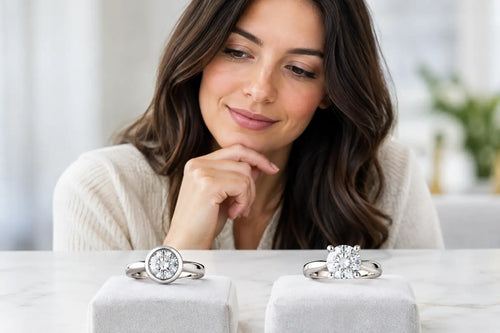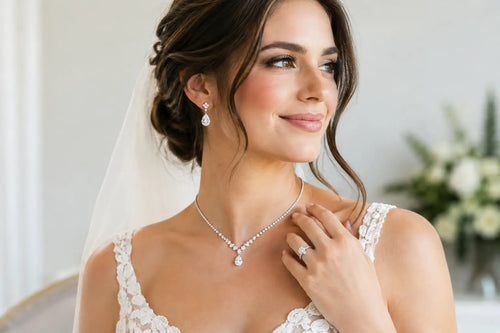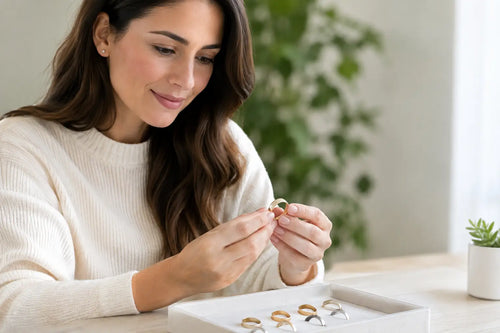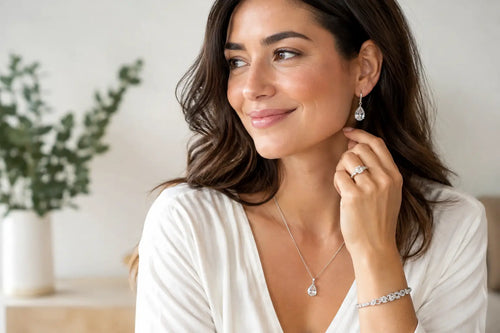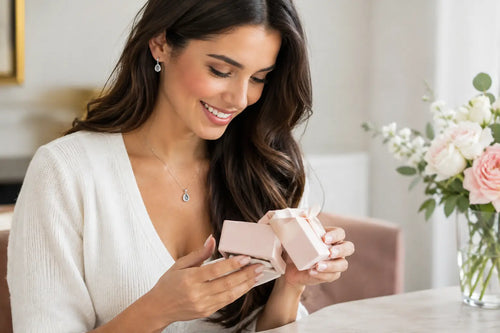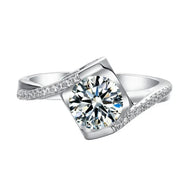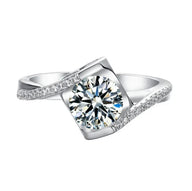

The center stone gets the first glance. The setting decides what happens next: how the ring catches light, sits against a wedding band, handles everyday wear, and feels on your hand for years to come. This ring setting guide is designed to help you choose a silhouette that gives your moissanite the spotlight it deserves - with brilliance, security, and unmistakable personal style.
A beautiful ring is never only about carat size. A D-color, VVS-clarity moissanite can look extraordinary in more than one setting, but each choice creates a distinctly different presence. Think of the setting as the frame around your love story: it can feel clean and timeless, romantic and luminous, architectural and modern, or boldly glamorous.
What a Ring Setting Really Does
A ring setting is the metal structure that holds the center stone in place. It also shapes the entire visual effect of the ring. The number and placement of prongs, the height of the center stone, the presence of accent stones, and the width of the band all influence how much sparkle you see and how practical the ring feels.
Higher settings allow more light to reach the stone from the sides, creating a dramatic profile and intense flashes of fire. They can also be more likely to catch on sweaters, hair, or gloves. Low-profile settings sit closer to the finger for an easy, streamlined feel, though they may show less of the stone from the side.
There is no single best choice. The right setting depends on how you dress, work, travel, stack your jewelry, and want your ring to make you feel. The good news is that moissanite's exceptional brilliance makes every setting feel elevated.
Ring Setting Guide: The Styles Worth Knowing
Solitaire: timeless, focused, and endlessly versatile
A solitaire setting features one center stone with no surrounding accent stones. It is the definition of refined confidence. With nothing competing for attention, the cut and shape of your moissanite take center stage.
This style is especially striking with oval, round, emerald, pear, radiant, and cushion cuts. A classic four-prong solitaire feels light and open, while six prongs add a more traditional look and additional points of security for a round stone. For someone who wants a ring that will look as right in ten years as it does today, a solitaire is hard to outgrow.
The trade-off is simplicity. If you love a highly detailed, head-turning look from every angle, you may want a setting with accent stones or a more sculptural band.
Halo: maximum sparkle around the center stone
A halo setting surrounds the center stone with a circle of smaller stones. The effect is luminous, glamorous, and larger-looking from the top. It can make a center stone appear more expansive while adding layers of brilliance that catch light with every movement.
Halos are especially flattering for oval, cushion, pear, and round moissanite. A hidden halo offers a more subtle variation: the accent stones sit beneath the center stone, creating a flash of sparkle from the side without changing the clean view from above.
Choose a halo if you want a romantic, high-impact ring and enjoy detail. Keep in mind that the smaller stones and their prongs introduce more fine elements to care for over time. A little attention goes a long way in keeping that intricate sparkle looking its best.
Pavé: light-catching detail along the band
Pavé settings use small stones set closely along the band, creating the appearance of a continuous ribbon of light. It is a polished way to add brilliance without taking attention away from the center stone.
A pavé band works beautifully with a solitaire center, whether you choose a crisp emerald cut or a fiery oval. It also pairs naturally with an eternity-style wedding band for a coordinated bridal look. If you want visual dimension from every angle, pavé brings that extra glow.
Because pavé uses delicate accent stones, it is best for someone comfortable treating fine jewelry with care. Remove your ring for intense workouts, heavy lifting, and hands-on cleaning. Luxury should be worn often, not carelessly.
Bezel: sleek protection with modern edge
A bezel setting wraps a rim of metal around all or part of the center stone. Full bezels offer a clean outline and exceptional protection around the stone's edge, while partial bezels leave more of the gem exposed for a lighter, more open look.
This setting feels modern, intentional, and quietly powerful. It is an excellent choice for active lifestyles, frequent travelers, and anyone drawn to a smooth, low-maintenance profile. Emerald, asscher, marquise, and pear cuts can look especially sculptural in a bezel.
A full bezel may cover more of the stone's sides than a prong setting, so it creates a different light performance. With precision-cut moissanite, you still receive extraordinary brilliance - simply in a sleeker, more tailored presentation.
Three-stone: meaning, balance, and visual presence
A three-stone setting places a center stone between two side stones. Traditionally, the design represents a couple's past, present, and future, which gives it natural emotional appeal for engagements and anniversaries.
The side stones can match the center stone shape or create contrast. An oval center with pear side stones feels soft and romantic, while an emerald center with tapered baguettes has crisp Art Deco elegance. Three-stone rings also offer generous finger coverage, making them a confident choice for someone who loves a substantial look.
This setting has more visual detail than a solitaire, but it remains balanced and timeless. It is ideal when you want symbolism and statement sparkle in one design.
Cathedral: height with classic drama
A cathedral setting uses metal arches that rise from the band to support the center stone. The profile resembles the graceful architecture that inspired its name, making the center gem appear lifted and prominent.
This style gives a solitaire or pavé ring a more formal, elevated feel. It is a beautiful option for a larger moissanite, especially if you want the stone to be visible from the side. The added height creates drama, but it may not be the most practical choice for hands that are constantly in motion.
Match the Setting to Your Stone Shape
Your favorite stone shape can point you toward the most flattering setting. Round moissanite is endlessly adaptable and looks exceptional in nearly every style, from a simple six-prong solitaire to a full halo. Oval cuts create a graceful, elongating effect and shine in solitaire, halo, and three-stone designs.
Emerald and asscher cuts emphasize clean lines rather than all-over sparkle, so they pair beautifully with sleek bezel settings, tapered side stones, or a minimal solitaire that lets their geometric facets speak. Pear and marquise shapes look striking in halos or three-stone designs, but make sure the pointed tip is properly protected by a prong or bezel detail.
Cushion and radiant cuts offer a balance of softness and brilliance. They can carry elaborate halos and pavé bands beautifully, yet still look sophisticated in a clean solitaire. The most compelling choice is usually the one that complements both the stone and your own style language.
Consider Your Everyday Life Before You Decide
A ring should feel exciting when you open the box and effortless when you wear it on an ordinary Tuesday. If you work with your hands, care for small children, wear gloves often, or simply dislike snagging jewelry, look toward a lower setting, bezel, or sturdy solitaire. If your ring is part of your signature look and you love drama, a halo, cathedral, or elevated pavé design can be worth the extra care.
Also consider your future wedding band. A straight band often sits flush against a higher solitaire or cathedral setting. Lower profiles may require a curved or notched band to fit closely beside the engagement ring. Neither option is better - it simply changes the look of your bridal stack.
Metal tone matters, too. Bright white metal creates a crisp, diamond-like presentation for colorless moissanite. Yellow gold brings warmth and vintage romance, while rose gold feels soft, personal, and unexpected. Choose the metal you reach for in your everyday jewelry, then let the setting build on that instinct.
Make the Smart Choice Feel Spectacular
The most memorable ring setting is not the one with the most details. It is the one that feels made for the person wearing it. A clean solitaire can be every bit as commanding as a halo when the stone is exceptional, and a bezel can feel more fashion-forward than a high-profile design when modern style is the goal.
At Henri Carat, precision-cut moissanite brings D-color beauty, VVS clarity, and unmistakable fire to the setting you love - without the conventional diamond markup. Choose the silhouette that makes you pause, smile, and picture it on your hand. That instinct is often the clearest sign you have found the right one.