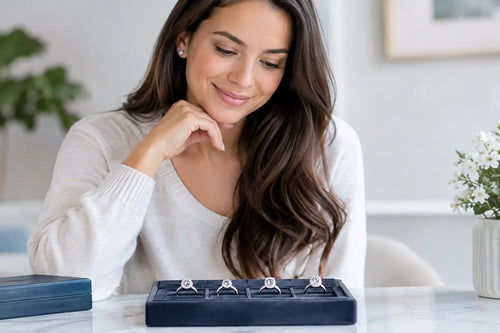

A moissanite clarity guide should answer one question before anything else: will your stone look clean, bright, and extraordinary when it catches the light? For most buyers, that matters far more than a microscopic technical detail. A beautifully cut, high-clarity moissanite delivers the crisp, diamond-like radiance you want to see across the room and in every close-up.
At Henri Carat, premium moissanite is selected for D color, VVS clarity, and precision cutting because every love story deserves a gem that shines with confidence. Here is what clarity means, what it does to your stone’s appearance, and where your attention is best spent when choosing a ring or piece of fine jewelry.
What Does Moissanite Clarity Mean?
Clarity describes the tiny internal characteristics, called inclusions, and surface characteristics, called blemishes, within a gemstone. These may include minute crystals, wispy lines, pinpoints, or natural growth marks. Gemstone grading considers their size, number, placement, color, and how easily they can be seen.
In a diamond, clarity grades can make a dramatic difference in price because diamonds with fewer visible inclusions are rarer. Moissanite follows a similar vocabulary, but the shopping experience is often simpler. High-quality moissanite is typically created in controlled laboratory conditions, allowing for exceptional consistency and a remarkably clean appearance.
That does not mean every moissanite is identical. Lower-quality stones can show visible inclusions, haze, dull areas, or uneven polish. But with a premium VVS-clarity stone, inclusions are extremely difficult to detect even under magnification. To the unaided eye, the result is a clean, luminous center stone with no distraction from its brilliance.
Moissanite Clarity Grades, Made Simple
You may see clarity described with the same grade families used for diamonds. The practical difference between them is easiest to understand by thinking about what you can actually see while wearing the piece.
FL and IF: Flawless and Internally Flawless
Flawless and internally flawless stones have no inclusions visible under 10x magnification, with only minimal surface details possible in the latter category. These grades are exceptionally rare in diamonds and command a significant premium.
For moissanite, pursuing an ultra-technical flawless label is rarely necessary for visual beauty. Once a stone is eye-clean and expertly cut, its sparkle will be the feature everyone notices. Paying more for distinctions that require magnification to appreciate may not be the smartest use of your budget.
VVS: The Premium Sweet Spot
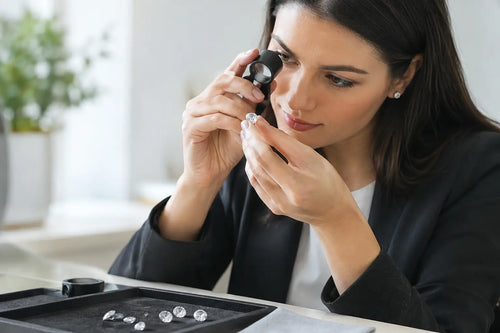
VVS means Very, Very Slightly Included. Any inclusions are tiny and extremely difficult for a trained grader to find under 10x magnification. In everyday wear, a VVS moissanite looks pristine.
This is the clarity level many style-conscious buyers want for a reason. It supports the pure, high-definition look of a premium stone without asking you to compromise on size, setting, or design. A VVS moissanite in a classic round solitaire can feel timeless. The same clarity in an emerald-cut three-stone ring or a bold oval halo preserves that polished, luxury finish.
VS and SI: When the Details Begin to Matter
VS, or Very Slightly Included, can still be eye-clean, especially in smaller stones or highly brilliant cuts. SI, or Slightly Included, may contain inclusions that are easier to spot under magnification and can sometimes become visible without it.
Whether these grades are a concern depends on stone size, shape, and inclusion placement. A tiny pinpoint near the edge may be hidden by a prong. A dark mark directly beneath the table, the large flat facet on top of the stone, is more likely to interrupt the look of an otherwise bright gem. For a center stone meant to make an impression, VVS clarity offers more immediate peace of mind.
I Clarity: Usually Best Avoided for Center Stones
Included-grade stones can have characteristics visible to the naked eye. They may affect transparency, brilliance, or durability depending on their nature and location. While these stones may cost less, they rarely deliver the clean, elevated presence most people want from an engagement ring or statement piece.
For jewelry designed to mark a milestone, clarity should never leave you questioning what you see. Brilliant does not need an asterisk.
Why Cut Often Matters More Than Clarity
Clarity is essential, but it is not the only reason a moissanite looks spectacular. Cut is what determines how light moves through the stone and returns to your eye as brilliance, fire, and scintillation.
Brilliance is the bright white light reflected from within the stone. Fire is the flash of spectral color that makes moissanite so captivating. Scintillation is the lively pattern of sparkle you see as the stone or your hand moves. A precise cut brings all three forward, while a poorly cut stone can look sleepy even if it has excellent clarity.
This is why a VVS, precision-cut moissanite is such a compelling choice. You are not simply buying a stone with minimal internal characteristics. You are choosing a gem engineered to look alive in candlelight, natural daylight, restaurant lighting, and the camera roll moments you will keep forever.
Shape Changes How Clarity Appears
Not every stone shape hides or reveals clarity in the same way. Round brilliant, cushion, oval, pear, radiant, and marquise cuts are full of smaller facets that create intense sparkle. Their lively faceting can make tiny internal details even less noticeable.
Step-cut shapes, including emerald and Asscher cuts, are different. Their long, open facets create a sleek hall-of-mirrors effect rather than a glittering mosaic. That elegant geometry can make the center of the stone more transparent, so high clarity is especially valuable. If you love the clean lines of an emerald-cut ring, choosing VVS clarity helps maintain the glassy, refined look that makes the shape so distinctive.
Stone size matters, too. As a center stone gets larger, its interior becomes easier to inspect. A VVS grade remains a confident choice for larger carat looks because it preserves visual purity without sacrificing the dramatic scale that makes moissanite so alluring.
Do You Need VVS Clarity in Moissanite?
If you are choosing a premium engagement ring, wedding band, or gift meant to feel unmistakably luxurious, VVS clarity is an excellent standard. It gives you an eye-clean stone with a polished appearance and lets the design, size, and sparkle take center stage.
Still, “need” depends on your priorities. A smaller accent stone does not require the same clarity consideration as a large center stone. A pavé band, for example, is viewed as a field of sparkle rather than as individual gems. For those details, consistency of overall shine and secure craftsmanship often matter more than chasing a top clarity designation for every tiny stone.
For the main event, however, VVS provides the kind of confidence that feels effortless. You can admire your ring at arm’s length, share it in photos, and see only crisp light and exceptional fire.
How to Choose a Clear, Beautiful Moissanite
Start with a trusted seller that clearly states the stone’s color and clarity. D-color, VVS-clarity moissanite gives you the bright white appearance and clean interior that create a diamond-like first impression. Then look at cut quality and stone shape, since both will influence how the gem performs in light.
Consider the setting as part of the visual equation. A sleek solitaire places all attention on the center stone, making premium clarity and cut especially meaningful. A halo adds scale and shimmer around the center. Three-stone rings bring romantic symbolism and balance, while vintage-inspired settings use intricate metalwork to create a more detailed, heirloom-inspired look.
Finally, choose a size that suits your personal style rather than a rulebook. Moissanite gives you the freedom to prioritize presence, whether that means a delicate round stone, an elongated oval, or a striking emerald cut with unmistakable sophistication. Looks like a diamond. Priced like a smart decision.
Care That Keeps the Sparkle Clear
Even the highest-clarity moissanite can look muted when everyday lotion, soap, hairspray, and skin oils collect on its surface. This is not a flaw in the stone. It is simply a reminder that brilliance needs a clean stage.
Wash your jewelry regularly with warm water, mild dish soap, and a soft brush. Rinse carefully and dry with a lint-free cloth. Remove rings before applying heavy skincare products, cleaning with harsh chemicals, or doing activities that could knock the setting. Professional inspections can also help ensure prongs remain secure, especially for jewelry worn every day.
A clear moissanite is more than a grade on a product page. It is the bright, flawless-looking detail that turns a glance at your hand into a small moment of joy - one you can wear proudly, photograph beautifully, and make entirely your own.