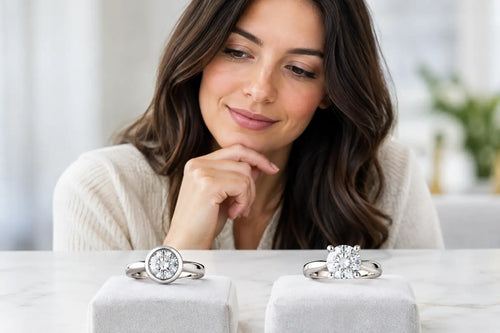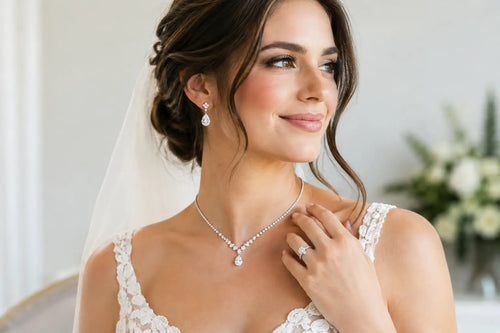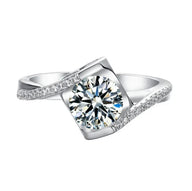

A pear-shaped ring never reads like an ordinary ring. Its rounded shoulder, tapered point, and elongated silhouette create a look that can feel delicately romantic or boldly glamorous depending on its size and setting. The right pear shaped moissanite ring size guide helps you choose more than a ring size. It helps you choose the amount of brilliance, finger coverage, and everyday presence that feels unmistakably yours.
Moissanite makes that decision more exciting. With D-color, VVS-clarity sparkle and exceptional fire, you can choose a larger visual statement without the conventional diamond markup. The key is finding proportions that flatter your hand while keeping the ring comfortable enough to wear with confidence every day.
Start With Your Actual Ring Size
Your ring size is the foundation. A pear stone can appear larger than a round stone of similar weight because its shape stretches along the finger, but the band still has to fit correctly. A ring that turns constantly, slides over the knuckle too easily, or feels tight by evening will take attention away from the stone you love.
Measure near the end of the day, when fingers are naturally at their fullest, and avoid measuring immediately after exercise, a hot shower, or a salty meal. If you are between sizes, the right choice depends on the band. A slender band often allows you to choose the smaller size, while a wider band may call for going up by a quarter or half size for comfort.
If the ring is a surprise, borrow a ring your partner already wears on the intended finger. Make sure it is from the correct hand. Fingers on the dominant hand are often slightly larger, and a size six worn on the left hand may not fit the right hand the same way.
Pear Shaped Moissanite Ring Size Guide: Carat and Coverage
When shoppers say “ring size,” they often mean stone size. For pear-shaped moissanite, millimeter measurements tell a clearer story than carat weight alone. Pears are cut in varying length-to-width ratios, so two stones with the same carat equivalent can look noticeably different on the hand.
A classic pear usually has a length-to-width ratio between 1.45 and 1.75. Around 1.50 to 1.60 looks softly balanced and traditional. A longer ratio closer to 1.70 creates a slimmer, more dramatic line across the finger. Neither is better. The right choice depends on whether you want a fuller, rounded silhouette or a sleek, elongated one.
Here is a useful visual reference for pear-shaped moissanite sizes. Measurements are approximate because individual cuts vary.
| Approximate carat equivalent | Typical pear dimensions | Overall look |
| --- | --- | --- |
| 0.50 ct | 7 x 5 mm | Delicate, refined sparkle |
| 1.00 ct | 9 x 6 mm | Classic engagement-ring presence |
| 1.50 ct | 10 x 7 mm | Noticeable coverage with balanced elegance |
| 2.00 ct | 11 x 7.5 mm | Bold, high-impact brilliance |
| 3.00 ct | 12 x 8 mm | Statement-making and highly luminous |
| 4.00 ct and above | 13 x 9 mm or larger | Dramatic luxury with maximum presence |
For many hands, a one to two carat equivalent pear hits the sweet spot: visibly brilliant, beautifully proportioned, and easy to wear from weekday errands to a formal celebration. A two to three carat equivalent creates more immediate visual impact, especially in a minimalist solitaire setting. Above that range, the ring becomes a true statement piece, which is exactly the point for buyers who want their center stone to lead the conversation.
Match Stone Size to Finger Width and Length
Longer fingers can carry a larger pear or a longer length-to-width ratio beautifully. The stone follows the direction of the finger, creating a graceful, editorial effect. On shorter fingers, an elongated pear can also be flattering because it creates the illusion of length, particularly when worn with the point facing the fingertip.
Finger width matters just as much as finger length. On a petite finger, a 9 x 6 mm pear often delivers generous coverage without overwhelming the hand. On a broader finger, a 10 x 7 mm or 11 x 7.5 mm stone can look especially balanced. These are guidelines, not rules. A bold 3-carat-equivalent pear on a size five finger can look spectacular if you want unapologetic sparkle.
The most useful question is not, “What size should I get?” Ask, “How much of my finger do I want the stone to cover?” A pear that reaches across much of the finger feels glamorous and fashion-forward. More visible metal around a smaller center stone feels understated, timeless, and easy to stack.
Choose a Setting That Supports the Look
The setting changes how large a pear-shaped moissanite appears and how it performs in daily wear. A fine solitaire band gives the center stone all the attention, making even a modest size look clean and luminous. A slim band also creates contrast, which can make the pear appear larger.
For extra protection, choose a setting that secures the pointed tip. The point is the pear’s most exposed area, so a V-prong is a smart, elegant detail. It preserves the distinctive silhouette while helping protect the stone from direct knocks.
A halo can add visible width and amplify sparkle, making a one-carat-equivalent pear read larger from a distance. It is ideal for someone who wants maximum brilliance without moving to a substantially bigger center stone. Three-stone designs add visual presence too, although they create a wider profile and may feel less minimal than a solitaire.
Band width deserves a moment of consideration. A 1.5 to 2 mm band keeps the look light and lets the pear take center stage. A 2.5 mm or wider band has a more substantial, modern feel, but it can make a smaller center stone appear more restrained by comparison. If you love a wider band and want a bold center, consider stepping up in millimeter size rather than relying on carat equivalent alone.
Decide Which Direction Feels Like You
Most pear engagement rings are worn point-up, with the tip toward the fingertip. This orientation elongates the hand and gives the ring its classic bridal appeal. It is polished, romantic, and instantly recognizable.
Wearing the pear point-down, toward the wrist, feels slightly more unexpected. The rounded end sits closer to the fingertip, producing a softer, fashion-led look. There is no etiquette rule that should outweigh personal style. Try both directions if possible, then choose the one that makes you want to look at your hand again.
Think Beyond the Proposal Photo
A large pear is beautiful, but everyday life still matters. If you work with your hands, wear gloves often, or prefer low-profile jewelry, a slightly smaller stone or lower setting may be the better long-term choice. You will still have extraordinary fire and diamond-like visual impact, simply in a design that moves more naturally with your routine.
Likewise, consider the wedding band. A pear solitaire can sit beautifully beside a straight band, though some settings leave a small gap. A contoured or curved wedding band follows the pear’s shape for a closer, more intentional pairing. If stacking is part of your vision, bring that into the size decision early. A large center stone with a delicate band creates a striking contrast, while a more substantial bridal set feels rich and sculptural.
Make the Smart Size Choice
Moissanite gives you freedom to choose for visual beauty rather than traditional price pressure. That does not mean bigger is always better. The most compelling pear ring is one that feels proportionate to your hand, true to your style, and practical for the life you actually live.
At Henri Carat, that can mean selecting a refined one-carat-equivalent pear with a slim, tip-protecting setting or embracing a luminous three-carat-equivalent stone that delivers unmistakable presence. Both choices offer exceptional sparkle, ethical confidence, and the kind of D-color, VVS-clarity brilliance that looks extraordinary from every angle.
Try to picture the moment after the compliments fade: your hand on a coffee cup, your ring catching light at dinner, the small flash of fire when you reach for someone you love. Choose the pear size that makes that everyday moment feel like yours.